


Today, the digital world is crowded, so making your website stand out is very important. Website templates give you a quick and cheap way to build a site, but these options often don’t let your business grow freely in the future. Many companies pick custom websites to shape their online presence according to exact goals and what their customers want. Unlike templates you get off the shelf, a custom design offers special features, growth power, and a stronger business look. These custom builds also boost website performance, work better with SEO, and look unique compared to others.
Although website design templates make sense for simple or starter pages, they are not ideal for complicated sites or for changes as your business grows. If your company wants to look different from the rest, custom website design usually brings more value for the years ahead. With customization, your site connects smoothly with the newest tools and web technology. Your choice between a template or a custom site depends on what the business really needs, but a custom design most often brings the widest advantages. Knowing how templates and custom builds differ is crucial to picking what fits your plan.
Seeing the Difference between Custom and Template Web Design
When you make a website, it is vital to see how custom web design and templates are not the same. Templates are ready-made pages users fill with their content, yet they let you change only a few parts, such as colors or pictures. If you choose custom web design, you start from zero, building every piece to match your business targets, user habits, and brand feel. Templates do help you launch a basic blog or small business site quickly. But most templates do not have the special tools or flexible functions that larger or growing organizations need.
With custom development, you set every detail, shape, and function to your wishes. For any brand wanting a special image, a custom website design puts your company's personality everywhere you want it. If you trust only company website templates, you risk having a site that looks and acts just like thousands of others. Templates work fast and can cost less, but they are not made to handle tricky requests or future changes. By learning about both choices, you can make decisions that support big brand plans.
Website Templates: Quick Help, Limited Choices
A website template is a layout already set up, where you only have to add text and photos. These tools help freelancers or small businesses who have little money or need a website to live on. Still, templates stop you from making deep brand changes or adding advanced features as your business grows.
Custom Website Design: Fully Matched, Ready to Grow
Custom website design is made for you alone by developers who listen to your business story and user needs. You get control over every color, button, and menu- from top to bottom. This option is best if your company wants a strong online image and expects to need new features later.
Branding and Identity Control
With custom design, you decide every part of your web page—layout, message, and how users feel when they browse. Templates rarely give this deep level of change or brand power. For any company that wants to be fully different, custom offers the best way forward.
Limitations of Templates
Many company website templates use basic styles that repeat across industries, causing many websites to look similar. Because you can only change small parts, your options for upgrades or adapting to business changes are blocked. Growing organizations often get stuck by these limits as they try to expand.
Strategic Decision-Making
The best pick—template or custom- depends on your budget, speed needs, and future vision. Templates help if you want something to live quickly and at a lower price, but a custom design means more freedom and individuality. Thinking about these key points helps your choice last for both short-term tasks and long-term plans.
Scalability for Business Growth
Ready-made templates struggle if you try to add new shops, extra language options, or private user portals. A website built just for you can include extra tools and functions at any stage. Planning to grow your site makes sure your investment lasts longer.
Search Engine Optimization (SEO)
Custom websites let your developer write clean code, keep pages fast, and set up a structure that search engines understand. Only a few company templates have very simple SEO settings, but they cannot match what a custom site can offer for higher search rankings. Strong SEO means better chances for people to find your business.
Performance and Speed
Templates might have extra scripts or design pieces you do not need, which slows the page for visitors. A custom-made website uses only the code you want, making every click faster and smoother. Fast sites keep users happy and rank better in search engines, too.
Security and Maintenance
Custom websites are safer because they use unique code and do not need so many public plugins that hackers know. If you use popular templates, you may risk more attacks from cyber criminals. Developers who build a website for you can put solid safety steps right from the start.
Cost Considerations: Short-Term vs. Long-Term
Templates seem cheaper at the start, and many small firms like to save money. If you need big changes in a few years, you may pay more to fix a template than you would with a smart custom design. Putting money into a custom site in the beginning can lower what you pay for changes or relaunches over time.
What Is a Custom Website Design?
A custom website design is a web solution built from scratch to match a company’s specific vision, business goals, and technical needs. Unlike a web design website template, custom web development gives you total control over site layout, features, and how different systems connect. You gain benefits like special navigation, made-for-you interactive parts, and backend systems that change as your business needs grow.
Custom design works well for organizations that want more than basic features from ordinary website templates. These sites stand out with top performance, improved SEO, and a smooth user journey. When you pick custom website development, you can use the latest coding styles and stronger security rules. This choice means your site is safer and can be made bigger as your business gets more customers. In comparison, just tweaking ecommerce site templates may limit your options or cause problems with plugins and tools. By investing in custom development, every part of the website supports your digital strategy exactly. If you think long-term, this path offers more chances for growth and a site that does not look like any other.
What Is a Website Template?
A website template is a ready-made layout designed so you can quickly put together a website by swapping in your own text and graphics. These website homepage design templates offer built-in spots for headers, menus, galleries, and sometimes more. Even though templates are fast to use, you don’t get much room to change details or create a unique brand style. Templates are best if you need a simple website, but they usually don’t serve you for growth.
When many people pick the same popular template, website designs can quickly repeat and look the same across sites. Most company website templates target general needs, which makes them useful only for small jobs or for short business plans. If you want your business to stand out, regular templates may prove too restrictive in the long run. Still, the best web templates work fine with systems like WordPress or Shopify. But if you try to change something big, you might still need help from a web developer. Templates give an easy start, but they are not the best pick for supporting growth and unique goals.
Template vs. Custom Web Design: How to Make the Right Choice
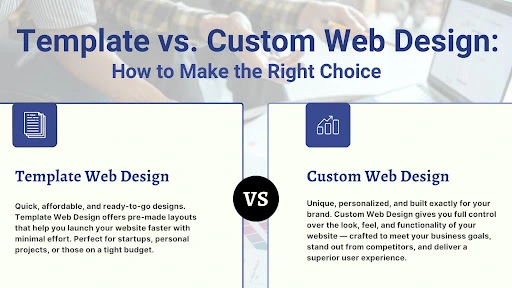
One of the most significant choices available to you, in planning your web presence, is the choice between a template-driven website and a custom-built website. There are pros and cons of each according to your purposes, finances, and time scale. This knowledge of the merits and demerits of the two assists you in making a wise choice that suits your brand.
Template Web Design
Pros
- Templates are cheap and often have one-time costs or subscription plans. You don’t pay for design and development from scratch, making it perfect for individuals, startups, or small businesses with limited budgets. It’s a smart way to get a professional online presence fast and cheap.
- Uscheaply web design website template means you can launch your website quickly. Since the layout, design, and features are pre-built, you just need to add your content and branding. This saves weeks or months of development time, perfect for time-sensitive or temporary promotional websites.
- Templates are user-friendly. The majority of them are installed with drag-and-drop content management systems such as WordPress. The user-intuitive websites enable even a non-coder to create, modify, and maintain their site without any difficulties, and without having to depend on a developer to update their site.
- There exist thousands of ecommerce website design templates on various platforms, industries, and style,s of design. Regardless of being a photographer, lawyer, blogger, or restaurant owner, you can find a layout that fits your niche. The diversity gives you the freedom to settle on something that is a and matching tmatchesd.
Cons
- While you can customize to a point, thebest website templates are rigid. Advanced customization, like layout changes or adding unique functionality, can be hard or impossible without altering the core code. This limits how well your site meets specific design needs or user experience goals.
- Since templates are so popular, many other sites will look similar to yours. This makes it hard to create a unique brand online. Visitors won’t remember your site, and it could be mistaken for another brand that uses the same or a similar template.
- As your business grows, template sites don’t scale well. Adding complex features or integrating advanced tools (like CRMs, eCommerce engines or APIs) can be hard or unsupported. Eventually you’llhavee to rebuild the site from scratch and waste time and money later.
- eCommerce website design templates come with features, scripts, and styles you may never use. This bloat can slow down page load, user experience, and searc,h engine rankings. Optimizing a template site for performance can be hard without developer help and requires manual removal of unused elements.
Custom Web Design
Pros
- Custom design means your site looks and feels cunique. Everything layout, colours, navigation, interactions, is tailored to your brand. This means a memorable experience that matches your identity and sets you apart from competitors who use the best website templates.
- With custom design, you have total control over every design and functional element. You’re not limited by pre-existing structures or platform restrictions. Want custom animations, interactive features o, or tailored navigation flows? Everything is built from the ground up to meet your exact requirements.
- Custom sites are built to grow with your business. As you grow, new features, tools, or integrations can be added without major rework. Whether it’s handling more traffic, adding new services, or launching sub-brands, custom designs offer longevity that templates can’t.
- Since every line of code is written for your specific use case, custom sites are cleaner and faster. No unnecessary bloat or extra features slowing it down. This means faster load times, better SEO, and a bet,ter user experience on desktop and mobile.
Cons
- Custom web design is way more expensive than using a template. It means hiring professional designers, developers, and sometimes project managers. The cost reflects the extra effort, time, and expertise required to build a website from scratch, tailored to your brand and business functionality. =
- Building a custom site takes time, from research and planning to bespoke website design , coding, testing, and launch. Unlike templates that can be deployed in days, custom projects take weeks or months. If you have a tight deadline, the time commitment may not align with your launch goals.
- You’ll need a team of professionals to design, develop, and maintain a custom website. Unless you’re skilled in multiple areas of custom website development, this adds a dependency on external partners. Ongoing support, bug fixes, or feature changes usually require developer involvement whic, which adds ongoing maintenance costs.
- After launch m, making big changes to a custom site can be technically complex and expensive. Unlike templates with built-in, changing core layouts or functionality can require going back to the developers. This can be time constime-consumingful especiall, especially if the original team is no longer around.
| AspectTemplate Web DesignCustom Web Design | ||
| Cost | Low, with one-time or subscription pricing | High requires hiring designers and developers |
| Time to Launch | Fast; ready in days | Slow; takes weeks to months |
| Ease of Use | User-friendly, no coding needed | Requires professional help |
| Customization | Limited; hard to change layout or features | Full control; tailored design and functionality |
| Uniqueness | Generic; many sites look similar | Unique and brand-specific |
| Scalability | Poor; hard to add advanced features later | High; easily upgradable and extendable |
| Performance | May have bloat; slower load times | Optimize, fasa, nd cleaner code |
| Maintenance | Easy for simple changes | Depends on developers; costly and complex updates |
Build Your Custom Website Experience with Digital Silk
When you let skilled experts build your custom website design, your brand’s unique personality shows in every small detail and action. Instead of picking standard ecommerce site templates, a custom approach puts your users’ needs, site speed, and must-have features first. Teams use advanced UI/UX methods, design content layouts for your goals, and add third-party tools to fit perfectly. Custom designs move with your business, handling new needs and helping you hit marketing targets. Every section and tool is made for a purpose—not forced to fit in a preset box.
Templates, even the best web templae cana hold back change by locking companies into certain shapes and features. Custom work makes sure your website matches how your team operates, what customers expect, and your data plans. Although website templates are simple to start with, they cannot grow or change as quickly as custom builds. A trusted team helps you make a site that runs well for the long term and keeps your brand looking sharp. In the end, you get a website that changes with your business with little compromise.
Reflecting Unique Brand Identity
When you choose custom website development, every action and visual shows what makes your business special. Unlike website templates, you can guide every design and function detail. This builds an online space that feels truly original to your audience.
Prioritizing User Experience and Performance
Custom websites are built with the best UI/UX practices to grab people’s attention and keep them happy. Templates often skip the deep touches needed for easy use and fast loading. Custom sites offer smoother, quicker, and smarter navigation made for your best visitors.
Personalized Content Architecture
A custom site organizes each section and page for your business goals and how your users think. This flexible layout tells your story better and can lift conversion rates. Templates usually give fixed options, which might not fit your business plan.
Seamless Third-Party Integrations
Custom web builds link your site to key outside tools and platforms without trouble. Often, templates are unable to manage special or complex connections well. Real integration lets companies automate tasks and gives users richer features.
Scalability and Adaptability
With a custom site, new features or changes fit easily as your business grows or pivots. Template designs often force companies to stay within strict limits on style and action. Custom structures keep up as business changes, scaling without major rebuilds.
Conclusion
To sum up, while website homepage design templates work for fast and cheap projects, their limits will show as your business grows or your needs change. If you want to stand out in the market and reach top results, custom design brings lasting benefits. Custom websites deliver strong branding, flexible growth, tighter security, and better value over time. With templates like ecommerce website design templates, you only get a general setup, but custom sites adjust wtoyour btbusinessThey show off your brand’s real voice and give more digital power.
Templates may be fine for a new bespoke website design or simple projects. But for any organization with a vision to last, custom website development is the safer, smarter road. Whether you need mobile-ready layouts, custom UX, or strong plugins, custom sites do better on most counts. Choosing the custom route gives your site the ability to change, impress visitors, and grow business long-term. Planning your design carefully means you build a web future that works well and lasts.