




ERP systems help logistics companies organise all work through one system, making operations smoother, processes faster, and data easier to manage. This guide shares important steps to design and use ERP in logistics, plus trends and system types that are coming next. When a transport company uses ERP for transport company options built for its real needs, it gets more control, spends less, and gives better service on every level.
What Is ERP Software in the Logistics Industry?
ERP in logistics means using one software platform to connect departments—these include transportation, inventory, billing, and customer service—into a single ERP system transport . A good ERP transport system is the base for company operations, giving teams power to solve logistics problems right away. With efficient ERP transport, communication between staff improves and delays drop. By using ERP transportation management, companies track all shipments, cut costs, and keep customers happy with better updates.
Top ERP Ideas Summarised
New ERP systems for logistics put focus on automatic steps, teamwork, and keeping costs in check. Transport companies lower manual jobs by replacing old processes for input, dispatch, and storage with ERP tools. Common trends are connecting TSM software logistics, better reporting panels, and inventory tracking that updates in real time. Every strong ERP software for transport company fits daily needs of logistics and keeps all activities running all the time.
Understanding ERP Basics
ERP (Enterprise Resource Planning) lets organisations run main business steps in a single system. With ERP system transport, silos between groups disappear and work becomes more open. Many teams use TSM software logistics as part of ERP to run loads, watch fleets, and control schedules. Using ERP transportation management helps make data reliable, so teams check progress and see workflows clearly.
Importance of ERP in Transport Companies
In a transport company, ERP handles dispatch, billing, vehicle tracking, and delivery control by making tasks automatic. With transport ERP software, bosses spot issues quickly and always know where shipments stand in real time. Adopting ERP transport makes sure everyone—from customer support to warehouse, shares the same data. TSM software logistics works well with ERP to give control over advanced features.
Steps to Design and Implement ERP in a Logistics Firm
Success with ERP starts by planning, checking which platforms fit, and showing staff how things work. Each transport company should record what it wants, how it works now, and needed system changes. Picking a matching ERP for transport company setup keeps systems easy to connect and easy to grow. Following these steps helps the ERP software for transport company run at its best from launch.
Planning and Requirement Analysis
First teams look at their delivery patterns, staff work, and what problems the current system has. Groups write how ERP should make jobs easier using ERP system transport tools. Involving all areas, using transport ERP software or TSM software logistics, helps early teamwork. Usual tasks are asking for feedback, listing wanted features, and checking what people and money will be needed.
Choosing the Right ERP Software
Picking ERP means testing tools made for a transport company’s daily needs. Managers focus on real-time fleet view, scheduling, and planning automation. Some use TSM software logistics packed with ERP transport options to cover all jobs. Checking demos, reviewing providers, and making sure ERP software for transport companies fits all the needs is key.
Data Migration and Integration
Moving data safely from older tech into a new ERP system transport is one challenge. Integration joins all software, like GPS, billing, and care, from different places into one view. With ERP transportation management setup, the organisation links every department’s data without confusion. Tasks to do: gather all old data, match new and old fields, and test connections inside the ERP for transport companies.
Employee Training and Onboarding
Showing staff how to use new ERP software for a transport company well is a top step for a smooth switch. Specialised training by job helps everyone learn faster and fewer problems pop up. Employees who use TSM software logistics will practice different tasks than dispatch or accounting. Common moves are training sessions, simulations, and picking helpers for problems with ERP transport.
Post-Implementation Support and Monitoring
After launch, tracking ERP for transport company performance keeps it working for daily business. Teams check when the system is slow, log problems, and use results for fixes. Support for new modules and staff is included with the ERP system transport. Doing reviews and updates on time keeps transport ERP software strong and safe.
Future Trends in ERP for Logistics
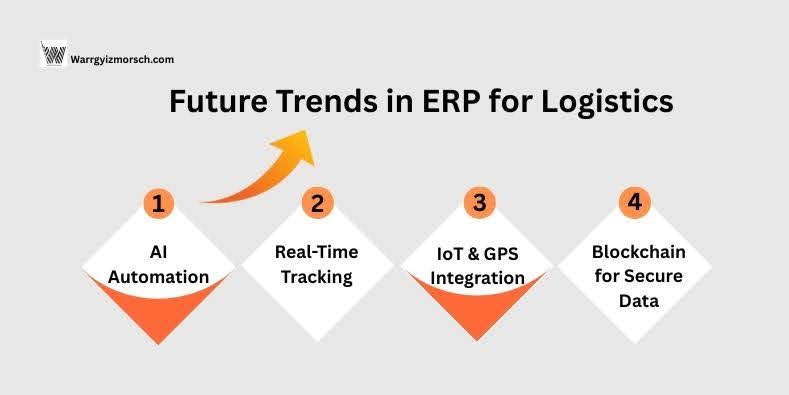
As technology moves forward, ERP systems for transport add new tools and connections. Big new features include AI, Blockchain, and GPS inside TSM software logistics for real-time answers. To keep their lead, transport companies must adapt to the next ERP software for transport company standards. Using automatic tools, live data, and phone-ready platforms is the new normal.
AI Automation
AI works inside ERP transportation management to plan best routes, spot delays, and balance loads in real time. It can create automatic scheduling and better use for busy fleets. OSS through AI can upgrade decisions based on what the data shows. Steps involve: teaching AI with alerts, training models, and adding AI to transport ERP software features.
Real-Time Tracking
Companies can watch vehicles, drivers, and deliveries all the time using real-time tools. ERP for transport company setups with this tracking bring better workflow and quick help with any issue. Functions are often inside TSM software logistics for instant results. Steps involve setting up GPS, alerts for every trip, and marking completed deliveries in ERP transport.
IoT & GPS Integration
IoT systems collect up-to-the-minute info from vehicles and storage to let companies manage all assets better. Adding GPS and IoT in ERP system transport lets firms see real conditions as things move. These tools help transport teams find problems before they grow. Things to do: place sensors, link live feeds, and see the numbers on ERP transportation dashboards.
Blockchain for Secure Data
Blockchain guards ERP transport systems by checking each record and user. This gives trust between all companies that move goods together and blocks cheating. When TSM software logistics connects with Blockchain, shipping records cannot be changed in secret. Tasks are: setup nodes, activate smart contracts, and join them with ERP software for transport company files.
SM Software – Logistics Flow and System Structure
SM Software supports main work in logistics by using ERP modules in one setup. These modules handle job types like ERP transportation management, inventory, and payments. Logistics companies use SM as a transport ERP software to connect all business parts. Common tasks might be: setting up dispatch chains, building reports, or tailoring dashboards with TSM software logistics.
Top Benefits of Transportation Management Solutions
TMS (Transport Management Solutions) help with load handling, real-time delivery, and picking carriers. Combined with ERP system transport, these programs lower costs and show all shipment steps. With TMS and ERP software for transport companies working together, managers make better plans and cover all supply steps. Features include route optimisation, tracking key indicators, and using transport ERP software for each supply chain phase.
Conclusion
Planning and using ERP well changes how a transport company runs by improving data view, how teams work together, and profits. Picking the best ERP for a transport company ensures a company can handle growth and smart use of all goods and time. With ERP for transport getting new AI and Blockchain upgrades, companies will need to learn new tools for speed and success. Bringing transport ERP software together with TSM software logistics makes sure your business competes and stays in front.