


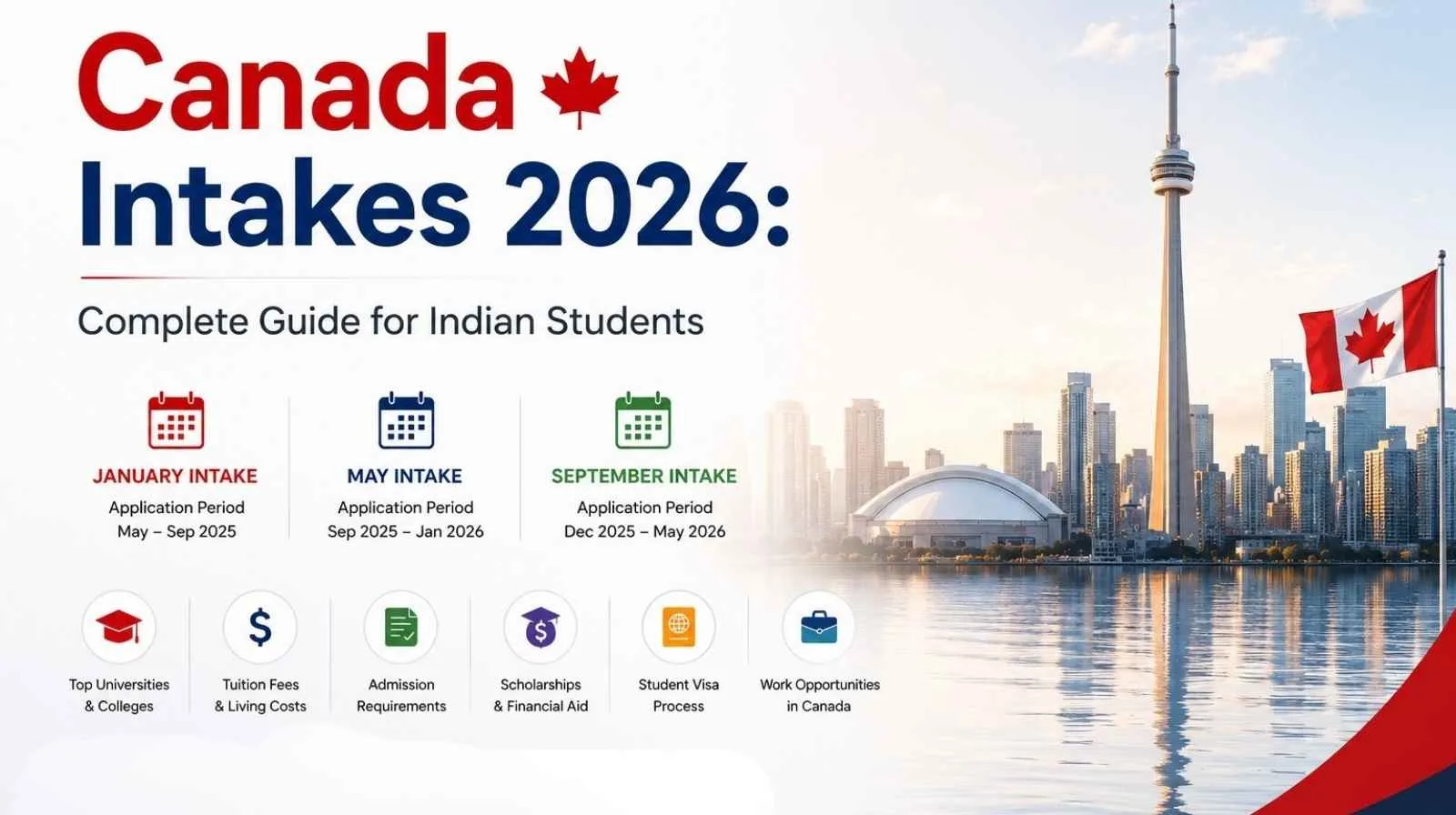

Canada has three main intakes for international students September (Fall), January (Winter) and May (Summer). If you are an Indian student planning to study in Canada in 2027–28, the September intake is usually the most popular. It offers the widest choice of courses and more scholarship opportunities. However September intake is also the most competitive, so courses can fill up quickly and deadlines are often earlier.
But choosing an intake is not just about knowing when applications open. Canada’s international student rules have changed in 2026, including a lower study permit cap, new exemptions for some master’s and PhD students, changes to the fast-track visa process and higher proof-of-funds requirements. These changes are important to understand before you plan your 2027–28 application.
This guide walks through why Canada is still worth the effort, how the three intakes compare, which courses suit which intake and the mistakes that cost Indian applicants their preferred intake every year.
Why Choose Canada for Study
Canada remains a popular choice for Indian students because of its globally recognized universities, work opportunities and post-study options.
Students can study at leading universities such as the University of Toronto, McGill University and the University of British Columbia. Eligible students can also work while studying and may apply for a Post-Graduation Work Permit (PGWP) after graduation.
Canada also offers potential PR pathways through programs such as Express Entry and PNPs, while co-op and internship programs can help students gain practical work experience. A large Indian community also makes settling into student life easier.
However, recent immigration changes have made Canada more competitive, so choosing the right course and intake and planning early is important.
Comparison of All Three Intakes in canada
Each intake has its own advantages and limitations. September offers the most courses and scholarship opportunities, while January gives students more time to prepare. May has fewer options but can still be useful for selected courses. Here is a quick comparison to help you choose the right intake:
|
Factor |
September (Fall) |
January (Winter) |
May (Summer) |
|
Program choice |
Widest |
Moderate |
Limited |
|
Application period |
Nov 2026 – Jan 2027 |
Sep – Nov 2027 |
Dec – Feb |
|
Competition |
High |
Moderate |
Low |
|
Scholarships |
Most options |
Some options |
Few options |
|
Co-op/Internships |
Strong |
Moderate |
Limited |
|
Best for |
Most UG & PG students |
Students needing more prep time |
Selected diploma/certificate programs |
Which intake should you choose? September is ideal if you want the More choice, while January is a good backup if you need more preparation time. May works best when your preferred course is available.
Overview of All Intakes: Deadlines, Rules and Costs for 2027-28
The application timeline can vary by university and course, but knowing the usual schedule can help you plan ahead. Here is what Indian students can generally expect for each Canada intake.
September (Fall) Intake 2027
The September intake is the main intake in Canada with the largest choice of undergraduate and postgraduate programs. Applications generally open several months before the start date, so it is best to begin preparing early.
|
Stage |
Typical Timing |
|
Shortlist universities and take IELTS/PTE/TOEFL |
Aug – Oct 2026 |
|
Submit applications |
Nov 2026 – Jan 2027 |
|
Receive admission and required documents |
Feb – Apr 2027 |
|
Arrange finances and apply for study permit |
May – Jun 2027 |
|
Prepare for travel and accommodation |
Jul – Aug 2027 |
Popular courses can fill up early, especially in computer science, engineering and business, so applying before the final deadline is a smart move.
January (Winter) Intake 2028
The January intake is a good option if you missed September or need more time to prepare. Applications generally open around September or October 2027 with deadlines often falling in October or November.
There are fewer programs compared with September, but many universities still offer courses in areas such as business, IT, health sciences and diplomas.
May (Summer) Intake 2027
The May intake has the fewest course options and is mainly available for selected diploma, certificate and some graduate programs. Applications are often submitted between December and February.
If your preferred course is available in May, it can be a useful option. However, students looking for the widest range of bachelor's and master's programs will usually find more choices in September or January.
What Changed for 2027-28: Rules Worth Knowing
Canada has introduced several changes that Indian students should keep in mind when planning their 2027–28 intake.
- Study permit limits: Canada has reduced the number of new international students it plans to accept. This means getting a study permit can be more competitive, so applying early is important.
- Master’s and PhD exemption: From January 2026, students applying for eligible master's or PhD programs at public institutions no longer need a Provincial Attestation Letter (PAL) or Territorial Attestation Letter (TAL).
- Student Direct Stream is no longer available: The Student Direct Stream (SDS) was discontinued in November 2024. Indian students now apply through the regular study permit process, so you should allow enough time for processing.
What does this mean for you? Start your application early, keep your financial documents ready and check the latest study permit requirements before applying. This can help you avoid delays and improve your chances of getting your preferred intake.
Common Mistakes to Avoid
Planning early can save you from unnecessary delays. Here are some common mistakes Indian students should avoid:
- Relying on old SDS information: SDS was discontinued in 2024, so always check the current study permit process instead of following outdated advice.
- Starting documents too late: Financial documents, language tests, and other paperwork can take time. Start preparing them well before your application deadline.
- Waiting for the final deadline: Popular courses can fill up before the official deadline. If your application is ready, apply early.
- Choosing an intake without checking the course: Not every course is available in September, January, or May. Always check your specific program before choosing an intake.
- Ignoring current visa requirements: Study permit rules can change. Check the latest requirements before submitting your application to avoid unnecessary delays.
Conclusion
Canada is still a popular choice for Indian students because of its quality education, work opportunities and post-study options. For 2027–28, however, planning ahead is more important because of the recent changes to Canada’s student and study permit rules.
September is the best choice for students looking for the widest range of courses and universities. January is a good alternative if you need more preparation time, while May is suitable for selected courses and programs.
Whatever intake you choose, check your course availability, prepare your documents early and keep enough time for the study permit process. Ideally, start planning 10–12 months before your intended intake.
If you are unsure which intake, course or university is right for you, getting advice from a study abroad consultantcan help you make a better decision based on your budget, profile, and career goals.